
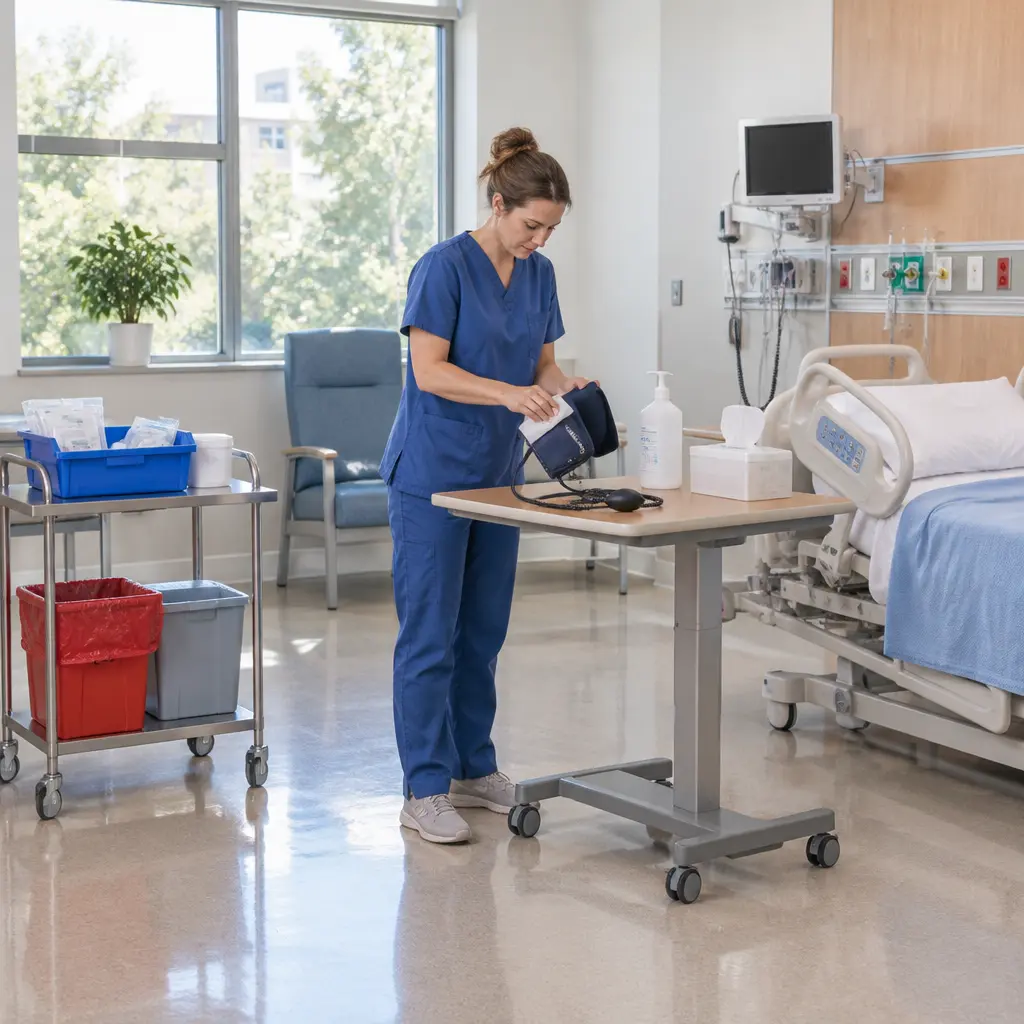
Shared-device hygiene is the set of practices used to clean, disinfect, handle, and store equipment between patients so microorganisms are not carried from one person or surface to another. In patient-care environments, reliable protocols pair hand hygiene with device-specific cleaning and disinfection, following the manufacturer’s instructions and the facility’s infection-prevention policies. The need is substantial: the U.S. Centers for Disease Control and Prevention (CDC) estimates that, on any given day, about one in 31 hospital patients has at least one healthcare-associated infection. This guide explains how device risk is classified, how protocols should be carried out, which devices need special attention, and how auditing and staff training can help prevent cross-contamination.
Protocols Define Shared-Device Hygiene
A shared-device hygiene protocol is a documented sequence for cleaning and, when appropriate, disinfecting reusable equipment between uses, while specifying who is responsible, which products and contact times apply, and how completion is verified. The CDC’s guidance for disinfection and sterilization in healthcare facilities emphasizes that the required level of processing depends on how a device is used and the infection risk it presents. Cleaning removes soil and organic material; disinfection inactivates many or all disease-causing microorganisms on inanimate objects, depending on the method; sterilization destroys all forms of microbial life, including bacterial spores.
The practical categories include routine cleaning of low-risk surfaces, disinfection of reusable patient-care equipment, and higher-level processing or sterilization for devices that enter sterile tissue or contact mucous membranes. A protocol should never treat these steps as interchangeable: disinfecting a visibly soiled device without first cleaning it can reduce the effectiveness of the process. The CDC and the U.S. Food and Drug Administration (FDA) also stress that reusable devices must be processed according to their labeling and instructions for use.
Risk classification guides the required process
The Spaulding classification is a risk-based framework used to determine how reusable medical devices should be processed. Critical devices enter sterile tissue or the vascular system and require sterilization. Semicritical devices contact mucous membranes or nonintact skin and generally require at least high-level disinfection. Noncritical devices contact intact skin and usually require cleaning and low- or intermediate-level disinfection, depending on the device and circumstances. Examples include surgical instruments, respiratory equipment, and blood-pressure cuffs, respectively.
Classification is a starting point, not permission to disregard device-specific instructions. The CDC notes that manufacturer instructions, the type of patient contact, visible contamination, and the care setting all affect processing decisions. When instructions are unclear or incompatible with a facility’s routine, infection prevention staff should resolve the issue before the device is reused.
A complete protocol assigns responsibility
A workable protocol identifies the person or role responsible for each step, the approved disinfectant, required wet contact time, any rinse or drying requirements, and how clean equipment is separated from used equipment. It also specifies what to do when a device is damaged, cannot be cleaned as directed, or has been exposed to blood or other potentially infectious material. The Occupational Safety and Health Administration (OSHA) requires employers to maintain an exposure-control plan for occupational exposure to bloodborne pathogens, which supports clear procedures for contaminated equipment and staff protection.
Cleaning and Disinfection Break the Transmission Chain
Device cleaning and disinfection reduce the opportunity for pathogens to move between patients through hands, equipment, and nearby surfaces. The World Health Organization (WHO) describes hand hygiene as a core infection-prevention measure, while CDC guidance treats environmental and equipment cleaning as complementary controls. A disinfected device can be recontaminated if staff handle it with unclean hands or place it on a contaminated surface; therefore, protocols must connect device processing with hand hygiene and clean storage.
Cleaning removes material that interferes with disinfection
Cleaning is the physical removal of soil, organic material, and other residues, typically using water, detergent, and friction or an approved mechanical process. It is essential because blood, secretions, and other debris can shield microorganisms from disinfectants. Staff should follow the device manufacturer’s instructions for disassembly, cleaning agents, brushes, and any limits on immersion or automated processing. A device should be inspected after cleaning; visible soil, cracks, or damaged surfaces can make safe reprocessing unreliable.
Disinfectant selection and contact time matter
Disinfection uses an appropriate chemical or physical process to inactivate microorganisms on equipment and surfaces. Staff should select a product that is registered and labeled for the intended use and compatible with the device material. The surface must remain visibly wet for the product’s labeled contact time; wiping it dry too soon can undermine the intended effect. CDC guidance also cautions that stronger or more concentrated chemicals are not automatically safer or more effective and may damage devices or expose staff and patients to avoidable hazards.
Hand hygiene and clean handling complete the process
Hand hygiene means cleaning hands with soap and water or an alcohol-based hand rub at the clinically appropriate moment. WHO’s “Five Moments for Hand Hygiene” framework includes before touching a patient, before a clean or aseptic procedure, after body-fluid exposure risk, after touching a patient, and after touching the patient’s surroundings. For shared equipment, staff should perform hand hygiene at the relevant transition between handling used devices and touching clean devices or patients, and should avoid placing processed equipment on unclean work surfaces.
Device-Specific Protocols Address Different Risks
Not all shared equipment has the same exposure pattern. A bedside monitor, a blood-pressure cuff, and a probe that contacts mucous membranes require different handling and may have different manufacturer-approved methods. CDC environmental infection-control guidance recommends cleaning and disinfecting shared medical equipment between patients, with particular attention to high-touch items and equipment used in isolation rooms.
Noncritical equipment requires between-patient disinfection
Noncritical equipment touches intact skin or the patient-care environment. Examples include stethoscopes, blood-pressure cuffs, thermometers, and some monitor controls. Staff should clean and disinfect these items between patients and whenever visibly soiled, using a compatible product and the required wet contact time. Frequently touched controls and handles deserve explicit attention because they are easy to overlook during rushed room turnover.
Semicritical devices require higher-level processing
Semicritical devices contact mucous membranes or nonintact skin. Examples can include certain respiratory and endoscopic equipment. These devices generally require at least high-level disinfection after thorough cleaning, unless their design or intended use requires sterilization. Reprocessing staff must follow the manufacturer’s validated instructions, including required disassembly, channel cleaning, exposure parameters, rinsing, drying, and storage. Disposable components should not be reused unless the device is specifically labeled and authorized for reprocessing.
Portable electronics need compatible cleaning methods
Shared tablets, phones, barcode scanners, and computer peripherals can move between patient rooms and clinical work areas. Their screens, seams, and charging accessories may be difficult to clean, and harsh chemicals can damage them. Facilities should establish device-specific instructions using both the equipment manufacturer’s guidance and an appropriate disinfectant label. Where feasible, cleanable covers or dedicated devices can reduce contamination opportunities, but covers must themselves be cleaned and replaced when damaged.
Workflow and Storage Prevent Recontamination
A sound workflow creates a visible boundary between used, actively processed, and clean equipment. This separation reduces mix-ups during busy shifts and prevents a cleaned device from being contaminated again before use. The CDC’s environmental infection-control recommendations support organizing supplies and equipment so clean items are protected from splash, soil, and contact with used items.
Point-of-care processing reduces missed steps
Point-of-care processing means cleaning and disinfecting equipment close to where it was used, when the device and product instructions allow it. This can reduce the chance that a used device is carried into a clean area or left for an unclear handoff. If processing must occur in a designated reprocessing area, staff should transport used equipment in a manner that contains contamination and keeps it separate from clean supplies.
Clean storage preserves the result
Clean equipment should be fully dry when required and stored in a designated, protected location, away from sinks, waste, used devices, and high-touch contaminated surfaces. Facilities should label or otherwise identify clean and dirty storage zones and avoid returning a processed item to a shared cart until the cart has also been cleaned as required. A simple workflow diagram can show the sequence: “used device → contained transport if needed → cleaning → disinfection or sterilization → inspection and drying → protected storage.”
Training and Auditing Verify Protocol Performance
Written procedures work only when staff can carry them out consistently. Training should cover risk classification, cleaning before disinfection, product compatibility, wet contact time, hand hygiene, personal protective equipment, and escalation when equipment is damaged or instructions are unclear. Competency should be assessed through demonstration and observation, not attendance alone.
Observation and feedback reveal workflow gaps
Audits can assess whether staff clean all relevant surfaces, follow contact times, separate clean and used equipment, and document required processing. Direct observation and practical checklists can identify missed steps; fluorescent markers or other approved assessment tools may help evaluate surface coverage, but they do not by themselves prove that a device is microbiologically safe. Results should be shared with teams in a nonpunitive manner and paired with corrective coaching.
Outbreak investigations show why shared equipment matters
Investigations of healthcare-associated outbreaks have repeatedly examined contaminated equipment and lapses in cleaning as possible links in transmission. For example, CDC investigations of outbreaks involving multidrug-resistant organisms have highlighted the importance of thorough environmental cleaning, equipment disinfection, and hand hygiene as part of a bundled response. Such findings do not mean every contaminated surface causes infection; they show why facilities should treat shared devices as one potential route among several and investigate process failures promptly.
Conclusion: Reliable Device Hygiene Protects Every Patient
Shared-device hygiene depends on matching the level of processing to device risk, cleaning before disinfection, using compatible products for the full labeled contact time, and preventing recontamination through hand hygiene, workflow separation, and protected storage. Device-specific instructions, staff competency, and routine audits turn these principles into repeatable practice. Because healthcare-associated infections remain a substantial patient-safety concern, healthcare organizations should review their shared-equipment inventory, confirm that procedures match current manufacturer instructions and CDC guidance, and provide staff with practical training and feedback. Further reading from the CDC, WHO, FDA, and OSHA can help teams strengthen local protocols.
Sources: Centers for Disease Control and Prevention, Healthcare-Associated Infections (HAIs), https://www.cdc.gov/healthcare-associated-infections/about/index.html; Centers for Disease Control and Prevention, Guideline for Disinfection and Sterilization in Healthcare Facilities, 2008, https://www.cdc.gov/infection-control/hcp/disinfection-sterilization/; Centers for Disease Control and Prevention, Environmental Infection Control in Health-Care Facilities, https://www.cdc.gov/infection-control/hcp/environmental-control/; World Health Organization, WHO Guidelines on Hand Hygiene in Health Care, 2009, https://www.who.int/publications/i/item/9789241597906; U.S. Food and Drug Administration, Reprocessing of Reusable Medical Devices, https://www.fda.gov/medical-devices/products-and-medical-procedures/reprocessing-reusable-medical-devices; Occupational Safety and Health Administration, Bloodborne Pathogens Standard, 29 CFR 1910.1030, https://www.osha.gov/laws-regs/regulations/standardnumber/1910/1910.1030