
When children are isolated from peers—because of illness, disability, geography, emergencies, or family circumstances—effective entertainment is more than a way to fill time: it can support connection, play, learning, and emotional well-being. The best options are accessible, age-appropriate, varied, and, where possible, shared with a trusted adult or another child. UNICEF reported that at least 1.5 billion students worldwide were affected by school closures during the COVID-19 crisis, underscoring how abruptly children can lose everyday social and recreational opportunities. This guide reviews the evidence on play and screen use, then compares practical choices including creative activities, movement, books and audio, and safe ways to connect with others.
What effective entertainment for isolated children means
The American Academy of Pediatrics (AAP) describes play as a central part of healthy development, supporting language, social skills, emotional regulation, and relationships. In this context, effective entertainment means an activity that gives a child enjoyment or meaningful engagement while fitting their age, abilities, circumstances, and available support. It is not a promise that entertainment alone can resolve loneliness, anxiety, or other health concerns.
Useful options fall into several related categories: imaginative and hands-on play, physical activity, reading and audio, carefully selected digital media, and real-time social connection. They work best as a flexible mix rather than a single prescribed solution. A child recovering from surgery, for example, may need quiet audio stories, while a child confined indoors during bad weather may benefit from movement games and a video call with a friend.
Why isolation changes the choice of activity
Isolation reduces ordinary chances to play with classmates, visit relatives, attend clubs, or explore outdoors. The reason and duration matter: temporary separation during an illness differs from prolonged isolation caused by inaccessible services or displacement. The Centers for Disease Control and Prevention (CDC) emphasizes that children’s social, emotional, and developmental needs vary by age and individual circumstances. Caregivers should therefore choose activities that match a child’s energy, attention, communication, and mobility needs.
What the evidence says about play and screens
Play is not merely a reward after learning; it is one way children practice decision-making, communication, and self-expression. The AAP’s clinical report on the power of play recommends making time for child-led play and supportive interaction with adults. Digital entertainment can also offer stories, creative tools, and contact with others, but its value depends on content and context. The AAP’s family media guidance encourages families to consider what children watch, how they use it, and whether it displaces sleep, physical activity, conversation, or other important routines.
Creative and hands-on entertainment for isolated children
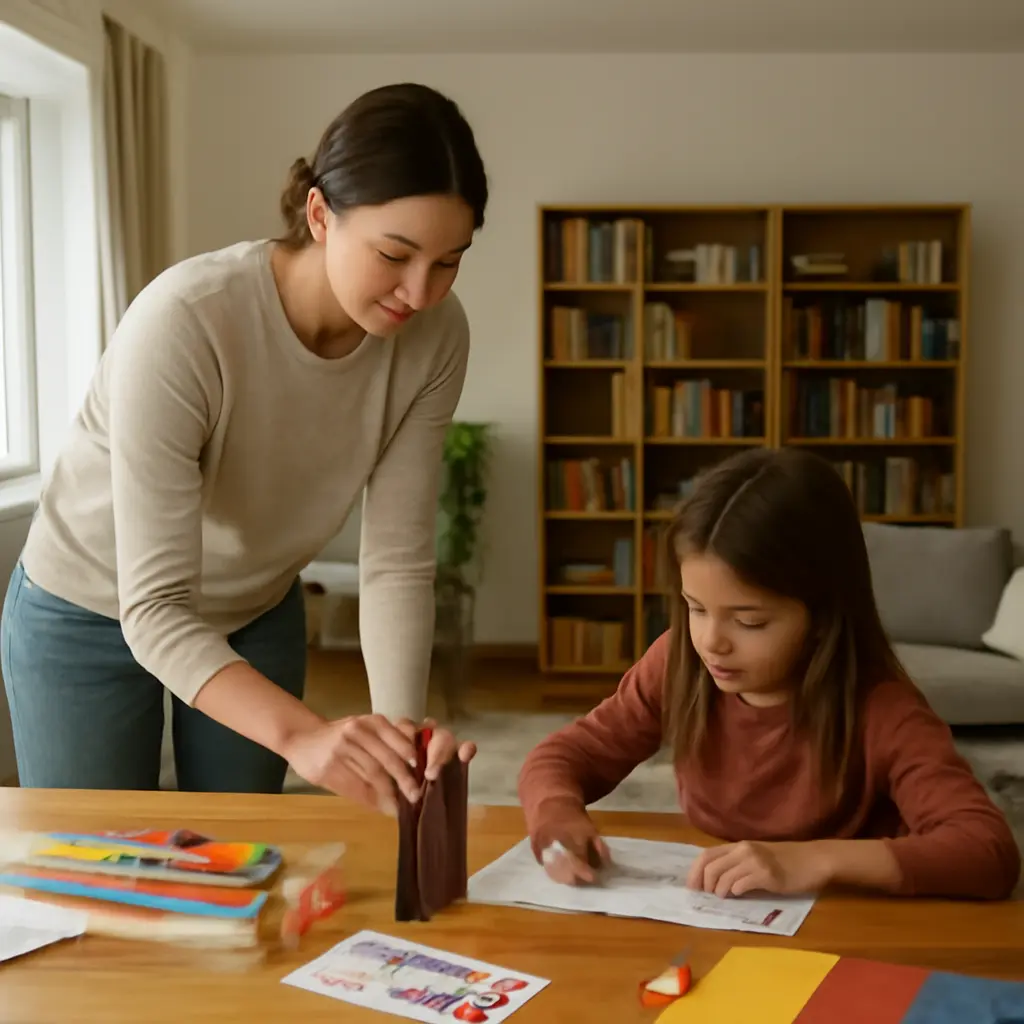
Creative entertainment lets children make choices and produce something of their own. It can be low-cost and adapted for a kitchen table, bedside, or small room. Materials should be suitable for the child’s age and abilities, with adult supervision where needed.
Art, crafts, and making
Drawing, collage, modeling dough, simple building, and paper crafts provide open-ended play: there is no single correct result. Offer a small selection of accessible materials rather than a complicated project, and invite the child to choose a theme, such as designing a creature or making a card for someone they miss. For children with limited hand strength or vision, consider larger tools, textured materials, pre-cut shapes, or verbal and audio-led creative activities.
Pretend play, storytelling, and family games
Pretend play includes role-play, puppets, toy scenarios, and stories invented together. It gives children a way to explore feelings and familiar experiences without requiring them to explain everything directly. A caregiver can join as a responsive partner—following the child’s lead rather than directing every moment. Card games, puzzles, and cooperative board games offer another shared format; select rules and session lengths that suit the child’s age and concentration.
Movement and sensory activities that work indoors
Movement activities can break up long periods of sitting and add variety to a day spent indoors. The World Health Organization recommends that children and adolescents aged 5–17 average at least 60 minutes per day of moderate-to-vigorous physical activity across the week. That is a population-level health recommendation, not a requirement that every isolated child complete a particular workout; illness, disability, and medical advice may change what is appropriate.
Short movement games
Try a hallway scavenger hunt, seated stretches, a dance-along, balloon tapping, or an “invent a movement” game. Short bursts can be easier than one long session, especially for children with limited stamina or attention. Keep the space clear and adapt movements to the child’s mobility; if the child is unwell or has activity restrictions, check with their healthcare professional before introducing exercise.
Sensory play and calming choices
Sensory activities use touch, sound, sight, or movement—for example, sorting safe household objects by texture, listening to nature sounds, or exploring a supervised water-play setup. Some children find sensory input calming, while others may find particular sounds, textures, or lights uncomfortable. Offer choices, observe the child’s response, and stop or change the activity if it causes distress. Avoid small objects for children who may mouth them, and supervise water and other potential hazards closely.
Books, audio, and screen-based entertainment
Stories and media can provide comfort, novelty, and shared experiences when outdoor or peer activities are unavailable. A balanced plan distinguishes passive viewing from activities that invite the child to respond, create, or communicate. It also leaves room for sleep, movement, meals, and face-to-face interaction.
Books, audiobooks, and read-alouds
Reading together supports language and connection, while independent books and audiobooks let children revisit stories at their own pace. For a child who cannot easily hold a book or see print, try an audiobook, large-print edition, accessible e-book, or caregiver read-aloud. Libraries, schools, and community services may offer accessible formats or lending options; availability differs by location.
Choosing digital media with care
Video calls, age-appropriate games, creative apps, and educational programs can help a child stay engaged or in touch. The AAP advises families to make a media plan that accounts for a child’s age, needs, and daily routines rather than treating every screen activity alike. Prefer content that is age-appropriate and free from distressing material, use parental controls where useful, and watch or play together when possible. Avoid letting screens routinely replace sleep, movement, or meaningful conversation.
Social entertainment and connection from a distance
Entertainment becomes more socially meaningful when it gives children a chance to share attention with someone else. A short, predictable interaction may be more manageable than an open-ended call, particularly for younger children or those who tire easily.
Shared activities with family and friends
A video-call drawing session, remote storytelling, online cooperative game, or family quiz can turn communication into an activity rather than an interview. Give the call a simple purpose—such as showing a drawing or reading one story—and let the child choose whether to speak, listen, or leave early. For privacy, use familiar contacts, adult-supported accounts, and services appropriate to the child’s age.
When online contact is not suitable
Not every child has a reliable device, internet connection, private space, or interest in video calls. Alternatives include exchanging drawings or letters, listening to the same audiobook as a relative, or arranging a brief phone call with caregiver support. UNICEF’s reporting on pandemic school closures highlights the scale of disrupted access to education and social routines; it also reminds families and institutions that digital options cannot be assumed to be available to everyone.
How to build a realistic entertainment routine
A useful routine offers variety without turning recreation into another obligation. Caregivers can prepare a small menu of options and let the child choose according to mood and energy. Alternate active and quiet activities, include opportunities for connection, and make room for unstructured time.
- Ask what the child enjoys and what feels manageable today.
- Offer two or three clear choices, including a quiet option.
- Adapt materials, rules, and duration to the child’s age and abilities.
- Build in breaks for meals, sleep, movement, and conversation.
- Notice whether the activity leaves the child calmer, engaged, or frustrated, and adjust accordingly.
If a child’s withdrawal, sadness, fear, or loss of interest persists or interferes with daily functioning, entertainment alone may not be enough. A caregiver can speak with the child’s pediatrician, school counselor, or another qualified professional. Seek urgent local help if the child may be in immediate danger.
Conclusion: choose connection, choice, and flexibility
Effective entertainment for isolated children combines play, creativity, movement, stories, thoughtful media, and safe social contact. The evidence on play and physical activity supports offering children varied chances to explore and engage, while pediatric media guidance emphasizes balance and context. There is no single best activity: the right choice depends on the child’s age, health, abilities, interests, and access to people and materials. Start with the child’s preferences, keep activities flexible, and involve trusted adults or peers where possible. Families and communities can help by sharing accessible resources and checking in on children who remain isolated.
Sources: American Academy of Pediatrics, “The Power of Play: A Pediatric Role in Enhancing Development in Young Children,” Pediatrics, 2018, https://publications.aap.org/pediatrics/article/142/3/e20182058/38649/The-Power-of-Play-A-Pediatric-Role-in-Enhancing; American Academy of Pediatrics, “Media and Children,” HealthyChildren.org, https://www.healthychildren.org/English/family-life/Media/Pages/default.aspx; Centers for Disease Control and Prevention, “Child Development,” https://www.cdc.gov/child-development/; UNICEF, “COVID-19 and School Closures: One Year of Education Disruption,” 2021, https://data.unicef.org/resources/one-year-of-covid-19-and-school-closures/; World Health Organization, “WHO Guidelines on Physical Activity and Sedentary Behaviour,” 2020, https://www.who.int/publications/i/item/9789240015128.