
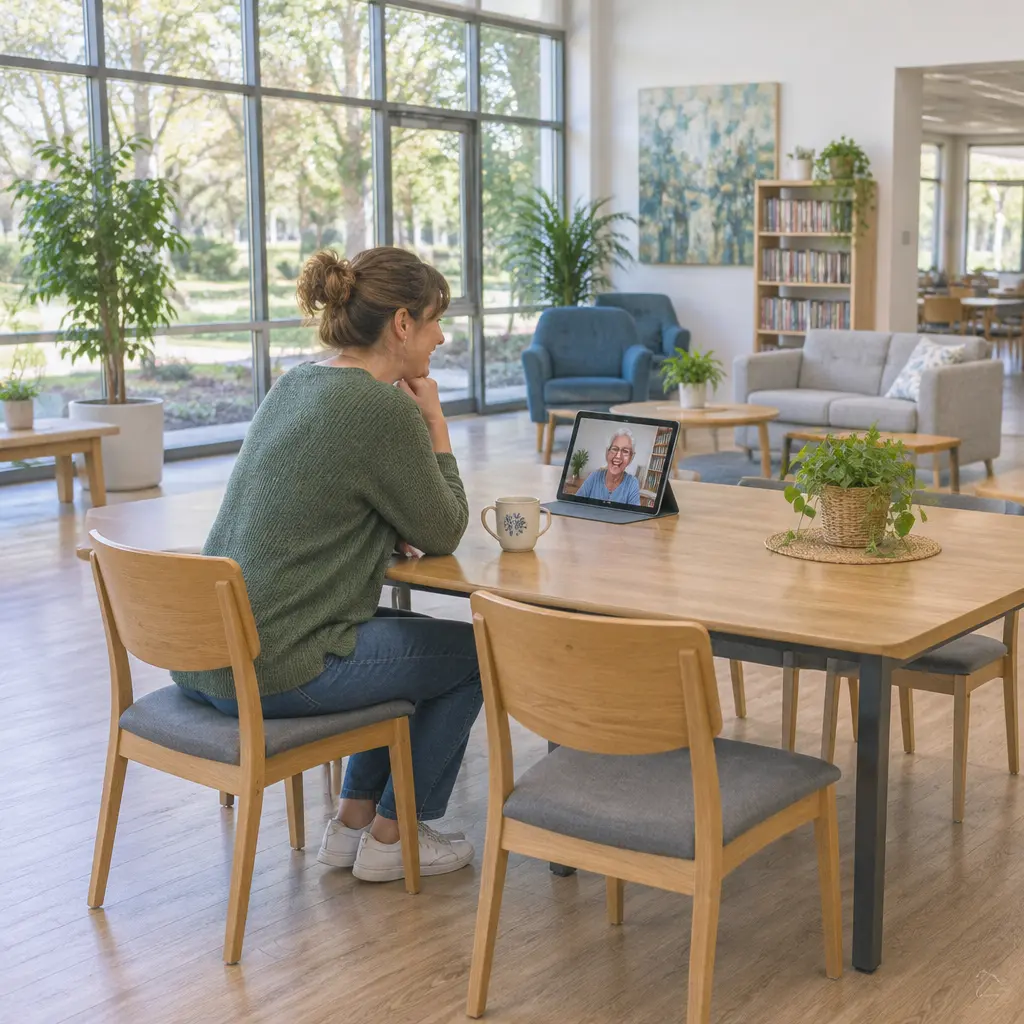
Social connection technology is the use of digital tools to help people communicate, participate in communities, and access support when in-person contact is limited. Used thoughtfully, it can ease isolation by maintaining relationships, creating new opportunities for belonging, and connecting people with services. Its importance is underscored by the U.S. Surgeon General’s 2023 advisory, which reports that about half of U.S. adults experience loneliness, and by research showing that digital contact can help—but does not automatically replace the benefits of supportive, face-to-face relationships. This article examines how technology supports connection, which tools and practices are most useful, what evidence and real-world examples show, and how to reduce the risks of exclusion and harmful use.
Technology’s role in easing isolation
Isolation and loneliness are related but distinct. Social isolation describes an objective lack of social contact or relationships; loneliness is the distressing feeling that one’s social relationships are insufficient. The National Academies of Sciences, Engineering, and Medicine (NASEM) emphasizes that either can affect health, while a person may experience one without the other. Technology can address practical barriers to contact and provide routes into social participation, but it cannot guarantee that a person feels understood or included.
The scale of the issue makes accessible connection important. The U.S. Surgeon General’s advisory, “Our Epidemic of Loneliness and Isolation,” reports that roughly one in two U.S. adults experienced loneliness even before the COVID-19 pandemic. It also describes social connection as a significant influence on health and well-being. These findings support using digital tools as part of a broader response—not as a stand-alone cure.
Technology enables connection through communication, community, and care
Social connection technology can be defined as digital devices, services, and communication systems used to sustain or develop meaningful relationships and social participation. NASEM’s work on social isolation and loneliness frames social connection in terms that include relationship structure, function, and quality; technology is useful when it improves those dimensions rather than merely increasing screen time.
This broad category includes video and voice calls, messaging, online interest groups, social networks, accessible communication aids, telehealth, and virtual peer-support services. Their shared characteristics include reach across distance, flexible timing, and the ability to accommodate some mobility, transportation, or caregiving constraints. Their limits include unequal internet access, accessibility barriers, privacy concerns, and the possibility that online exchanges may feel superficial or stressful.
Video calls and messaging maintain close relationships
Video calling and messaging are tools for maintaining existing relationships through real-time or asynchronous contact. They can help people separated by distance, illness, disability, work schedules, or caregiving responsibilities stay in touch. Voice and video also convey more conversational cues than text alone, although a call cannot fully reproduce shared physical presence.
A 2023 Pew Research Center report found that 93% of U.S. adults used the internet, illustrating the broad potential reach of online communication while also leaving a substantial minority offline. Adoption is not the same as meaningful connection: usefulness depends on reliable access, confidence using the tool, and whether contact is reciprocal and supportive. Scheduled calls, small group conversations, and shared activities—such as reading together or attending a family event remotely—can make contact more purposeful.
Online communities create routes to belonging
Online communities are digital spaces organized around shared interests, identities, life experiences, or support needs. Forums, hobby groups, local neighborhood platforms, and moderated peer communities can help people find others who understand a particular circumstance, especially when nearby social options are limited.
These spaces may provide information as well as companionship. For example, someone managing a rare condition can exchange practical knowledge with peers beyond their local area. The benefit depends on community quality: respectful moderation, clear rules, and pathways to trusted support can encourage safer participation, while harassment, misinformation, and exclusion can intensify distress. A useful online group complements—rather than necessarily replaces—relationships with family, friends, professionals, or local organizations.
Telehealth and digital peer support connect people with care
Telehealth uses communication technology to provide health services at a distance, while digital peer support connects people with others who have relevant lived experience. Both can lower travel and scheduling barriers and provide access to help for people who are homebound, live far from services, or feel more comfortable starting a conversation remotely.
The U.S. Department of Health and Human Services reported that telehealth accounted for 5.4% of Medicare fee-for-service evaluation and management visits in 2024, showing that remote care remains part of routine service delivery. Telehealth is not a substitute for every in-person assessment, and access may be limited by broadband, device availability, language, disability, or privacy at home. When these barriers are addressed, remote services can make professional and peer support easier to reach.
Technology’s benefits depend on inclusion and intentional use
Digital contact is most likely to ease isolation when it is accessible, relationship-centered, and connected to people’s actual needs. The National Academies’ review of interventions to reduce social isolation and loneliness found that approaches vary in their effectiveness and that interventions should be matched to the circumstances of the people they serve. This cautions against treating any single app, platform, or usage target as a universal solution.
Digital access is a prerequisite for digital connection
Digital inclusion means having the connectivity, suitable devices, accessibility features, and skills needed to participate online. The Federal Communications Commission’s 2024 report estimated that about 24 million Americans lacked access to fixed terrestrial broadband at benchmark speeds, with the burden falling unevenly across rural and other underserved communities. Even where service is available, its cost, device limitations, or lack of technical support can prevent meaningful use.
Programs that lend devices, offer affordable service, teach basic skills, and provide accessible interfaces can turn nominal availability into practical participation. Large text, captions, screen-reader compatibility, language options, and simple account recovery are especially important for older adults and people with disabilities. Digital inclusion is therefore not an optional add-on: it is part of whether technology can reduce isolation equitably.
Purposeful use matters more than screen time
Purposeful use means choosing technology to support a defined social goal, such as checking in with a friend, joining a moderated group, or finding a local activity. The distinction matters because passive browsing and social comparison may not provide the same benefits as direct, supportive interaction. A 2019 review by the National Academies concluded that the relationship between technology use and social isolation is complex, with outcomes shaped by how people use technology and by their circumstances.
A practical approach is to use digital contact as a bridge: arrange a regular conversation, join a group with shared interests, or use online tools to discover in-person events when feasible. People can also set boundaries around distressing content and notifications. The aim is not to maximize time online, but to improve the quality, continuity, and accessibility of social contact.
Privacy, safety, and trust shape participation
Privacy and safety measures help users participate without undue fear of exposure, exploitation, or abuse. Health-related conversations may involve sensitive information, while open social platforms can expose users to scams, harassment, or unwanted contact. Clear privacy settings, reputable services, moderation, and guidance on sharing personal information can reduce these risks.
Organizations providing digital support should explain what information they collect, how it is used, and how participants can report harmful behavior. For individuals, trusted contacts and moderated spaces can offer safer starting points. Safety is not separate from connection: people are less likely to participate when they do not trust the environment.
Real-world practice combines digital and human support
During the COVID-19 pandemic, video visits, group chats, and online community gatherings helped families, educators, health providers, and community organizations maintain contact when physical gatherings were restricted. These adaptations demonstrated the speed and reach of digital tools, while also exposing gaps for people without devices, broadband, digital skills, or accessible services.
A durable model combines technology with human assistance. A library or community center might lend tablets and teach video calling; a health service might offer telehealth alongside in-person appointments; and a local organization might use an online group to help participants find face-to-face activities. The U.S. Administration for Community Living’s Older Americans Act programs, including senior centers and supportive services, illustrate the importance of local human infrastructure that digital tools can extend rather than displace.
An accompanying chart could compare connection pathways—one-to-one calls, online groups, telehealth, and community programs—by reach, accessibility needs, and the type of support offered. Such a comparison should avoid ranking tools by usage alone; meaningful outcomes include whether people feel supported, can access help, and sustain relationships over time.
Conclusion: Technology supports connection when people come first
Technology can ease isolation by helping people maintain close relationships, find communities of shared experience, and reach health or peer support. Yet its benefits depend on equitable access, accessible design, purposeful interaction, and trustworthy environments. Statistics from the Surgeon General, Pew Research Center, the FCC, and HHS show both the scale of the social-connection challenge and the reach—and limits—of digital tools.
Individuals can begin with one manageable step, such as arranging a regular call or joining a well-moderated group. Community organizations and policymakers can expand affordable broadband, device access, digital skills training, and hybrid services that preserve human choice. Further reading from the U.S. Surgeon General and the National Academies can help readers evaluate evidence and design approaches that make connection more inclusive.
Sources: U.S. Department of Health and Human Services, Our Epidemic of Loneliness and Isolation: The U.S. Surgeon General’s Advisory on the Healing Effects of Social Connection and Community, 2023, https://www.hhs.gov/sites/default/files/surgeon-general-social-connection-advisory.pdf; National Academies of Sciences, Engineering, and Medicine, Social Isolation and Loneliness in Older Adults: Opportunities for the Health Care System, 2020, https://doi.org/10.17226/25663; National Academies of Sciences, Engineering, and Medicine, Social Isolation and Loneliness in Older Adults: Opportunities for the Health Care System, “The Role of Technology in Addressing Social Isolation and Loneliness,” 2019, https://www.ncbi.nlm.nih.gov/books/NBK557971/; Pew Research Center, Internet/Broadband Fact Sheet, 2023, https://www.pewresearch.org/internet/fact-sheet/internet-broadband/; U.S. Department of Health and Human Services, Telehealth Trends, 2024, https://telehealth.hhs.gov/research-trends; Federal Communications Commission, 2024 Section 706 Report, 2024, https://www.fcc.gov/reports-research/reports/broadband-progress-reports/2024-section-706-report; U.S. Administration for Community Living, Older Americans Act, https://acl.gov/about-acl/authorizing-statutes/older-americans-act